Television advertising for attorneys: when is TV worth it?
By Bhavesh Barot
- Updated
- Reading time
- 8 min read
- Guide number
- No. 051
On this page
- 01When does TV advertising make sense for a law firm?
- 02Broadcast, cable or streaming?
- 03What do the ethics rules say about TV ads?
- 04Producing a TV spot without overspending
- 05What makes a TV ad work?
- 06Intake makes or breaks TV
- 07Questions to ask a TV ad seller or agency
- 08How do you measure TV advertising?
- 09How does TV fit with search and AI answers?
- 10How does Seen in Search help?
- 11Questions lawyers ask about TV advertising
Television advertising has been part of US legal marketing since the Supreme Court's 1977 decision in Bates v. State Bar of Arizona opened the door to lawyer advertising. Personal injury firms in particular have built household names on TV. For a small or mid-size firm today, though, the question is whether TV, in its broadcast, cable or streaming forms, brings signed cases at a cost that works, compared with search, referrals and other channels.
This guide covers when TV makes sense, the options available now, what the ethics rules say about TV ads, why intake matters more than the ad, how to measure results, and how TV fits with search and AI answers.
TV builds name recognition; AI answers decide who gets named when someone asks. Our AI search for law firms page shows how to check yours.
When does TV advertising make sense for a law firm?
TV tends to work best when:
- the practice serves consumers who may need a lawyer suddenly and pick one they've heard of, such as personal injury, workers' compensation, social security disability, bankruptcy or criminal defense;
- the market is big enough for wide reach to produce enough cases;
- the firm can handle volume, with intake that answers fast at all hours;
- the firm can sustain it, since recognition builds through repetition over months;
- other channels are already working, so TV adds reach on top of a solid base.
It rarely suits firms serving businesses, niche practices or small towns where referrals and search do the job at far lower cost.
Broadcast, cable or streaming?
| Option | Strengths | Limits |
|---|---|---|
| Local broadcast TV | Broad reach in a market; daytime and news audiences | Expensive; reaches many people outside your target |
| Cable | Cheaper slots; some targeting by network and area | Shrinking audience as people cancel cable |
| Streaming (connected TV) | Targeting by area and audience; can measure visits | Ad formats and pricing vary by platform |
| Online video (YouTube) | Low entry cost; precise local targeting | Skippable; needs strong first seconds |
Many firms now start with streaming or YouTube for local targeting and lower entry costs, then add broadcast if results justify it.
What do the ethics rules say about TV ads?
TV ads are lawyer advertising under your state's rules, usually based on ABA Model Rules 7.1 to 7.3. TV raises specific issues:
- Misleading claims (Rule 7.1). No statements that create unjustified expectations, such as implying a large settlement is typical.
- Past results. Many states require disclaimers when ads mention results, and some restrict results in ads altogether.
- Dramatizations and actors. Many states require a disclosure when actors portray lawyers or clients, or when scenes are dramatized.
- Specialty claims (Rule 7.2). Limits on "specialist" or "expert" unless certified by an approved body.
- Responsible lawyer (Rule 7.2). Ads must include the name and contact information of at least one lawyer or firm responsible for the content.
- Filing and retention. Some states, such as Florida and Texas, require many ads to be filed for review, and many require copies to be kept for a set period.
- Spokespersons and celebrities. Some states have specific rules on non-lawyer spokespersons and endorsements.
Have someone who knows your state's rules review every script before filming.
Producing a TV spot without overspending
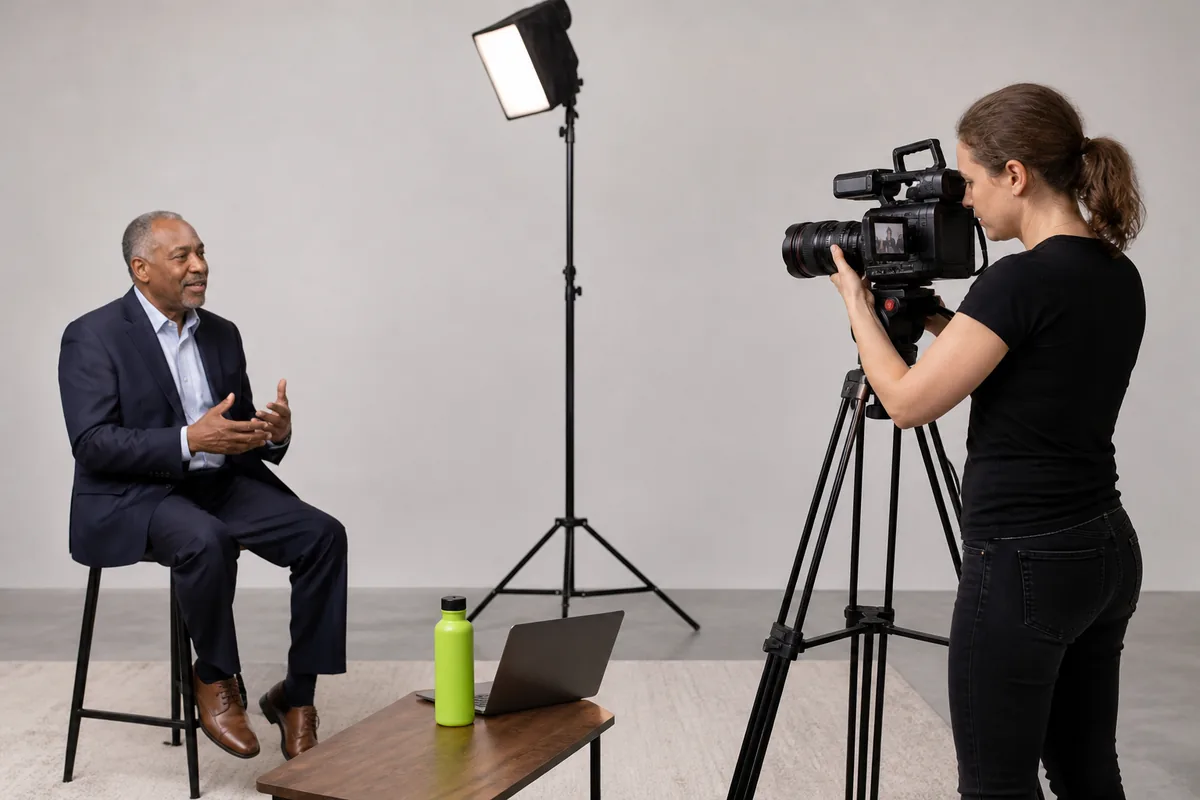
You don't need a film crew for every spot. Many effective local ads are simple: an attorney speaking directly to camera in a real office or plain studio, with good lighting and clear sound. Plan several short spots in one filming day, each covering one practice area or message, so you can rotate them. Keep a 15-second version for streaming and online video, where attention is shorter. Write scripts in plain words, have them reviewed for your state's rules before filming, and caption every version, since many people watch with the sound off.
What makes a TV ad work?
- A memorable name and number. People need to recall you weeks later.
- A real attorney speaking plainly, which builds trust and avoids dramatization rules.
- One clear message, such as the kind of case you handle and that consultations are free, if they are.
- Repetition. Short spots seen often beat one expensive spot seen rarely.
- Consistency across channels. The same name, look and message on TV, your website, your Business Profile and search ads.
Intake makes or breaks TV
TV produces bursts of calls, often outside office hours. If calls go to voicemail, the ad money is wasted.
- Answer every call live, around the clock if your ads run then.
- Use a short intake script to qualify callers and book consultations.
- Track which spot and station each call came from, with unique phone numbers.
- Follow up fast on callers who don't book.
Many firms lose more cases at intake than in the ad itself.
Questions to ask a TV ad seller or agency
- Which stations, channels or streaming platforms, and what audience in my area?
- How many times will a typical viewer see the ad?
- What does the package include: airtime only, or production too?
- How will calls and site visits be tracked?
- Can I see results from other law firm clients, with names removed?
- What are the cancellation terms?
Compare answers in writing before you sign, and ask for a short test period before committing to a long campaign. Keep every answer on file.
See whether AI assistants such as ChatGPT name your firm when people ask for a lawyer in your area. One free report per business, with a business email you verify. No card.
How do you measure TV advertising?
TV is harder to track than search, but you can:
- use unique phone numbers per station or campaign;
- watch branded search volume in Google Search Console and Google Ads; TV usually lifts searches for your firm's name;
- ask every caller how they heard of you;
- use streaming platforms' reporting, where available, for completed views and site visits;
- calculate cost per signed case, including production and airtime.
Give TV several months; recognition builds slowly.
Plan your web presence before the first spot airs. Expect searches for your firm's name to rise, and make sure your homepage, Google Business Profile and directory profiles are complete, current and consistent with the ad. Some firms also run search ads on their own name during TV campaigns so competitors can't intercept those searches.
How does TV fit with search and AI answers?
TV makes people remember your name. They then search it, or ask ChatGPT or Google about your firm, before they call. If your website is weak, your Google Business Profile incomplete or your reviews thin, the TV spend leaks away at that step.
AI assistants answering "best car accident lawyer in Houston" draw on directories, review sites, news and firm websites, not TV ads. Make sure what they find about you is clear and consistent. Our personal injury lawyer advertising guide compares all channels, and our law firm PPC guide covers search ads.
How does Seen in Search help?
A Seen in Search report shows whether AI assistants name your firm. It reads your homepage, writes buyer questions based on what the homepage says you offer, puts them to AI assistants such as ChatGPT, and scores how visible you are in the answers, in code, with fixed, published weights. You see each answer word for word, the competitors it named, the score, and a ranked list of what to fix first. Our methodology page shows how the score is worked out. Reports are private when they finish. It isn't legal advice on your state's rules.
Questions lawyers ask about TV advertising
Is TV advertising worth it for lawyers?
How much does TV advertising cost for a law firm?
Can lawyers use actors in TV commercials?
Do lawyer TV ads need to be filed with the bar?
Is streaming TV better than cable for law firms?
What should a lawyer TV commercial say?
How long does TV advertising take to work?
How do I track calls from TV ads?
Do TV ads help with Google rankings?
Does TV advertising affect what AI says about my firm?
One free report per business, private unless you publish it. Use a business email you verify. No card. Questions about the report? Contact us.